

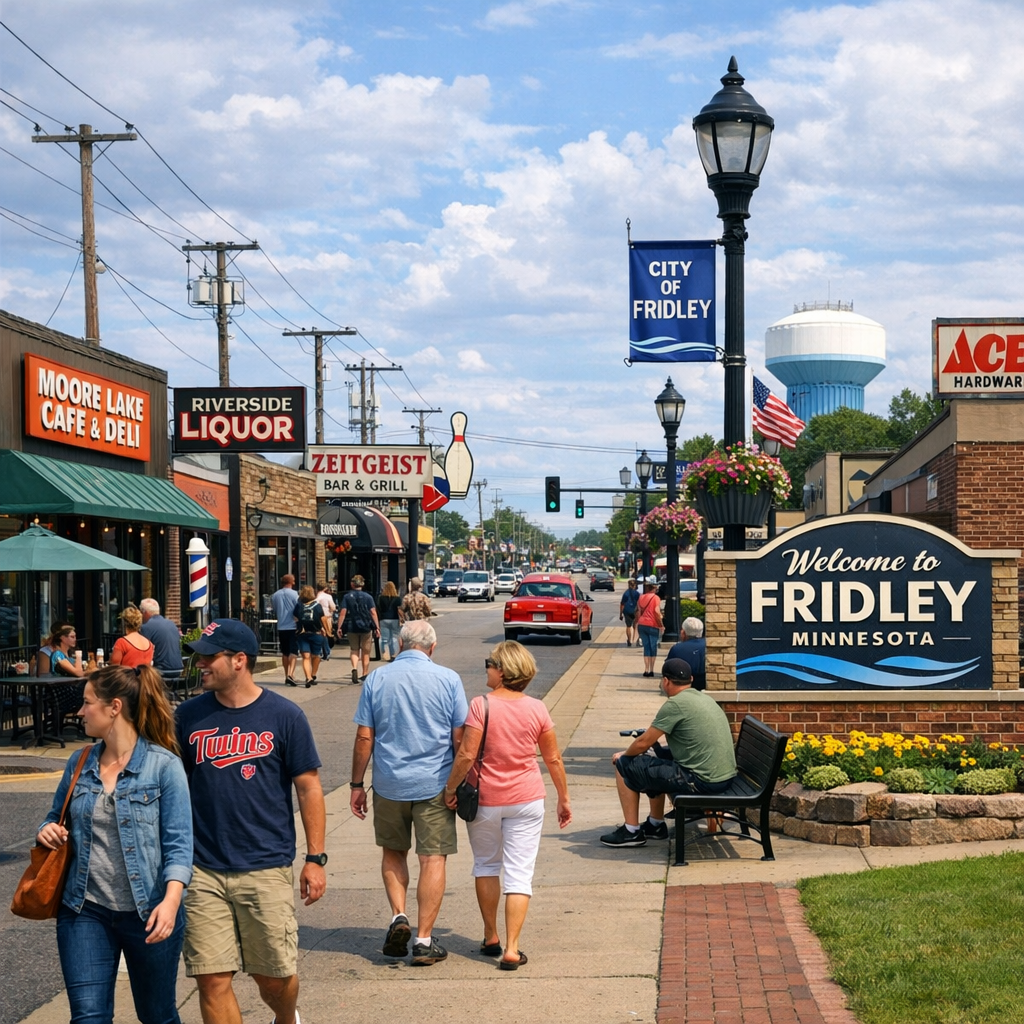
Fridley, Minnesota, continues to demonstrate steady economic growth and resilience, making it an attractive destination for both residents and businesses. This article provides an overview of the city’s current economic trends, housing market, and business environment.
Population and Demographics
As of 2026, Fridley’s population is projected to reach 31,366, reflecting a consistent annual growth rate of 1.9%. The median age of residents is 34.7 years, and the median household income stands at $77,680. The city’s diverse community comprises 54.7% White, 20.4% Black, and 14.1% Hispanic residents.
Housing Market Trends
The housing market in Fridley has experienced notable changes. In March 2026, the median sale price of homes was $350,000, marking a 19.7% increase from the previous year. Homes typically sell after 26 days on the market, indicating a competitive environment. The average rent for apartments is $1,198 per month, with a 2.1% increase over the past year.
Business Environment
Fridley hosts a robust business community, including major employers such as Medtronic, BAE Systems, and Unity Medical Center. The city supports local businesses through initiatives like the Fridley Liquor operation, which contributed nearly $400,000 to the General Fund and Equipment Capital Fund in 2025, directly alleviating property tax burdens on residents and businesses. Additionally, the city offers resources such as the Business Connection newsletter and personalized business visits to foster growth and sustainability.
Conclusion
Fridley’s economic landscape reflects a community poised for continued growth and opportunity. With a thriving housing market, a supportive business environment, and a diverse population, the city remains an appealing place to live and work.